The Parts of a Website: A Fun Guide for Business Owners
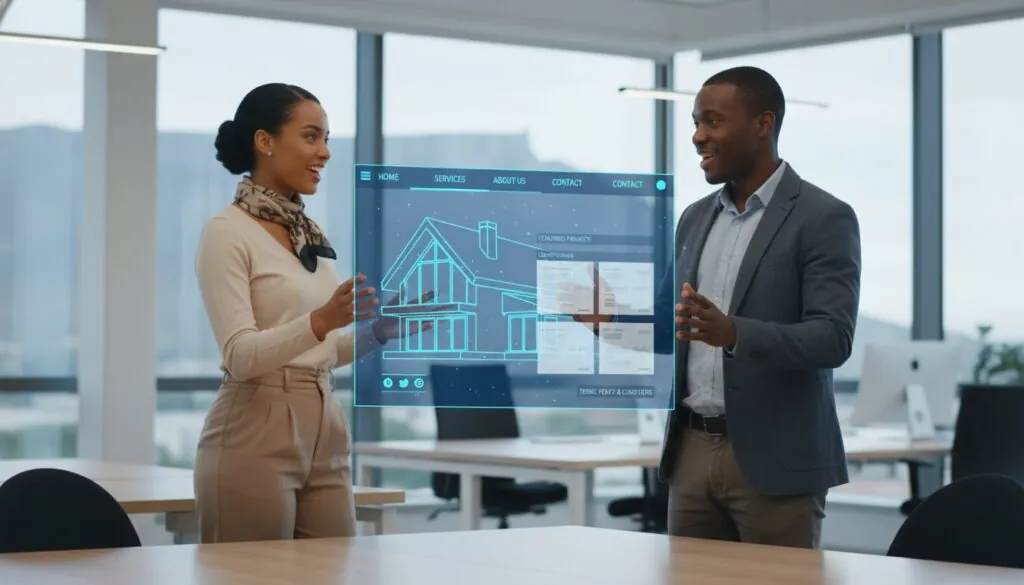
Ever felt like web designers are speaking a different language? All that talk about headers, footers, and CTAs can be confusing! But don’t worry. We’re here to break down the essential parts of a website in simple, fun terms so you can understand what makes a great site that actually gets results for your business.
Think of a Website Like a House: The Basic Structure
Let’s make this easy and fun, not complicated! The best way to understand a website is to think of it like a house. It has different rooms and areas, and each one has a specific purpose. Your website has three main zones, just like a house, that help visitors find their way around and feel at home.
- The Header: This is the friendly welcome at the front door. It’s the first thing people see and helps them navigate inside.
- The Body: These are the main rooms where everything happens. It’s where you entertain your guests and show them what you’re all about.
- The Footer: This is the solid foundation with all the important, practical information. It holds everything up and provides essential details.
Key Takeaways: The 5 Most Important Parts of a Website
If you’re in a hurry, here are the absolute must-haves that every great business website needs:
- A clear header with easy-to-understand navigation.
- A compelling headline and a strong call-to-action (CTA).
- Content that quickly and clearly explains what you do and for whom.
- A footer packed with contact info and other trust-building links.
- A mobile-friendly, responsive design that looks amazing on any device.
The Header: Your Website’s First Impression
The header is the very top section that appears on every single page of your website. Its job is simple but crucial: to tell people who you are and where they can go. A clean, professional header makes visitors feel confident and encourages them to stay and explore what you have to offer.
Your Logo: The Face of Your Brand
Your logo is your website’s digital handshake. It instantly shows visitors they’re in the right place and reinforces your brand identity. It should be clear, professional, and always link back to your homepage for easy navigation.
Navigation Menu: The Website’s GPS
Your navigation menu is the roadmap for your visitors. It should be a simple list of links to your most important pages. Think about the essentials: Home, About, Services, and Contact. The goal is to keep it clean and easy to understand. No one should ever feel lost on your website!
Call-to-Action (CTA) Button: The Most Important Button!
This is the button that tells your visitor exactly what you want them to do next. It’s the part of your website that turns a casual browser into a potential customer. Great examples include “Schedule a Call,” “Get a Free Quote,” or “Shop Now.” A strong CTA is clear, concise, and stands out visually.
The Body: Where the Real Magic Happens
The body is the main content area that sits right between your header and footer. This is where you get to tell your story, connect with your audience, and show them the incredible value you provide. The body is usually made up of different sections that work together to guide your visitor on a journey.
Hero Section: The Big Welcome
The hero section is the very first thing people see when they land on your homepage, often called the area “above the fold.” It typically includes a powerful, benefit-driven headline and an engaging image or video. You have about three seconds to grab a visitor’s attention, and your hero section is what does the heavy lifting.
Content Sections: Telling Your Story
This is the heart of your website-the text, images, and videos that do the selling for you. This is where you explain your services in detail, introduce your amazing team, and show off your best work. To make it effective, break up your text with clear headlines, bullet points, and plenty of white space to make it easy and enjoyable to read.
Social Proof: Building Trust with Testimonials
Would you hire someone without checking their reviews first? Your customers won’t either! Social proof includes testimonials, reviews, and logos from happy clients. This section is incredibly powerful because it proves that you’re trustworthy and great at what you do. It’s not just bragging; it’s building confidence.
The Footer: The Trusty Foundation
The footer is the section at the very bottom of your website. While it might not be the most glamorous part, it’s incredibly important. It’s where people instinctively look for contact details and other key information. A complete, well-organized footer shows that you’re a professional and credible business.
Contact Information
Make it as easy as possible for customers to get in touch. Your footer should always include the must-haves: your phone number, email address, and physical address if you have one. Don’t make people hunt for this information!
Social Media Links
Include simple icons that link directly to your business profiles on platforms like Facebook, Instagram, or LinkedIn. This helps visitors connect with you on their favorite platforms and see more of your brand’s personality.
Utility Links
This is the “boring but important” stuff that builds massive trust. These links include your Privacy Policy, Terms & Conditions, and FAQs. Having these readily available shows that you are transparent and professional, which makes potential customers feel much safer doing business with you.
Putting It All Together for an Amazing Website
See? Not so scary! You now know the complete anatomy of a great website. Each part has a specific job, and they all work together as a team to create a fantastic experience for your visitors. A truly effective website combines these parts seamlessly to guide visitors, build trust, and ultimately, grow your business. Ready to build a site that has all the right parts in all the right places? Take a look at our website design packages and let’s build something amazing together!
Frequently Asked Questions About Website Parts
What are the 3 main parts of a website?
The three main structural parts of any website are the Header (the top section with the logo and navigation), the Body (the main content area in the middle), and the Footer (the bottom section with contact info and utility links).
What is the most important part of a website?
While every part is important, many would argue the “hero section” combined with a clear call-to-action (CTA) is the most critical. It’s the first thing visitors see and it has to grab their attention and tell them what to do next in just a few seconds.
What is “above the fold” on a webpage?
“Above the fold” refers to the portion of a webpage that is visible without scrolling down. This is prime real estate, and it’s where your most important message and call-to-action should be placed.
What is the difference between a header and a footer?
The header is the navigation bar at the very top of the website, consistent on every page. The footer is the section at the very bottom of the website, which typically contains contact information, legal links, and social media icons.
Does every website need a sidebar?
No, not at all! Sidebars were more common in older web designs. Today, many modern, clean designs do not use a sidebar, especially for business websites. They are most commonly found on blogs or news sites to show recent posts or categories.
Why is a call-to-action (CTA) so important?
A CTA is crucial because it tells your visitors exactly what you want them to do. Without a clear CTA like “Contact Us” or “Buy Now,” visitors may not know what the next step is and simply leave your site. It’s the key to turning a visitor into a lead or a customer.
Understanding the parts of a website is the first step toward creating a powerful online presence for your business. It’s all about putting the right pieces in the right places to create a smooth and effective experience for your customers. When you’re ready to put it all together, we’re here to help make the process easy and fun.
Ready to Invest in a Website That Works?
JWD Website Design offers transparent website design packages for South African businesses of every size. Whether you need a simple 3-5 page website or a full e-commerce website, there’s no hidden costs, no lock-in, and a website you are proud to show off. Once your site is live, our website maintenance keeps it secure and up to date. Ready to have fun and get a website that works? Request a free quote today and let’s put all the right parts in all the right places. 🙂