Adver-Tech: A Website Case Study
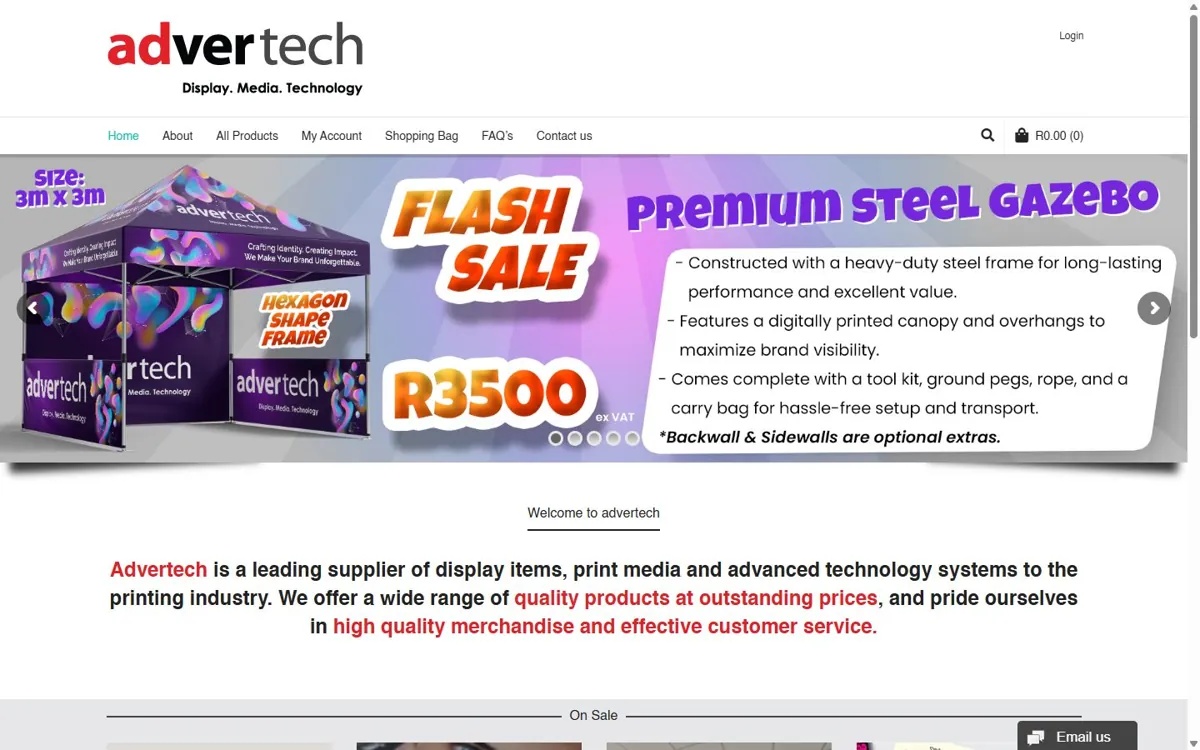
Adver-Tech, trading as Advertech Display, Media, Technology, supplies display materials, print media, and technology systems to the printing industry, with free local delivery within a 30km radius of its warehouse. This is a genuinely B2B, trade-facing e-commerce business, selling raw print materials and display systems to other businesses rather than finished products to end consumers.
About Adver-Tech
The product range covers vinyl stickers, layflat, contravision (one-way vision film), wallpaper, poster paper, canvas, and PVC banner printing materials, alongside indoor and outdoor display systems and technology products like an LED spotlight range. Pricing is live and transparent, quoted per square metre for materials, vinyl sticker at R120 per square metre, canvas at R200 per square metre, with specific discounted products like the SP-L2 LED Spotlight shown at R650, marked down from R700.
For a trade buyer, typically a print shop, sign business, or display company, sourcing materials in bulk, transparent per unit pricing is exactly what makes fast purchasing decisions possible.
What the website needed to do
Trade material buyers know exactly what they need and want to move quickly, so the site needed genuinely functional e-commerce: real per square metre pricing visible without a login or quote request, clear material categories, and a fast path from product to cart. Hiding pricing behind an enquiry form, common in some B2B categories, would work against how this specific buyer actually shops.
The free local delivery radius also needed clear, upfront visibility, since delivery cost and speed materially affect a trade buyer’s purchasing decision, particularly for bulkier materials like canvas or banner stock.
Why this matters for trade and wholesale e-commerce generally
For any business selling materials or supplies to other trade businesses, transparent, genuinely functional e-commerce beats an enquiry-gated model whenever the buyer already knows what they need. A sign shop reordering vinyl stock does not want to wait for a quote response, they want to see the price, add it to cart, and check out, the same way a consumer buyer would, just at trade volumes and trade pricing.
Live, specific pricing (per square metre, per unit) also does real credibility work in this category, since a vague “contact us for pricing” approach signals friction to a buyer accustomed to instant, transparent trade pricing elsewhere.
The result
Adver-Tech’s site is live now at adver-tech.co.za, built as a genuinely functional online store with live, transparent per square metre pricing and clear material categories for trade buyers. It is one of the businesses featured on our portfolio.
Considering something similar?
Trade and wholesale e-commerce businesses vary in cost depending on how many materials and product variants need loading. Our E-Commerce Website package is the usual starting point. Request a quote and we can confirm exact pricing for your catalogue.
Frequently Asked Questions
How much does a website for a trade or wholesale supplier cost?
It depends on how many materials and product variants need loading, and whether trade and retail pricing tiers are needed. Our E-Commerce Website package is the usual starting point, and we confirm exact pricing once we understand your catalogue.
Should B2B material pricing be shown openly, or hidden behind a quote request?
For trade buyers who already know exactly what they need, shown openly, wherever practical. Hiding pricing behind an enquiry form adds friction that works against how an experienced trade buyer wants to shop, and can push them toward a competitor with transparent pricing.
Why does per unit pricing (like per square metre) matter for material suppliers?
Because it lets a buyer calculate the real cost of their specific job instantly, rather than requesting a quote for what is often a straightforward, formulaic price. Transparent per unit pricing speeds up the entire purchasing decision.
Does delivery information need to be clearly stated for a trade e-commerce site?
Yes. Delivery cost, radius, and speed materially affect a trade buyer’s decision, especially for bulky materials, so stating this clearly upfront removes a common source of hesitation or abandoned carts.
How does B2B e-commerce differ from typical consumer online stores?
The core mechanics are similar, but B2B buyers usually already know precisely what they want and prioritise speed and transparent pricing over persuasive product storytelling. The site should be optimised for fast, confident repeat purchasing rather than discovery-led browsing.
How long does a website project for a wholesale or trade store take?
We confirm the timeline once the scope is agreed. It mostly depends on how many materials and product variants need pricing loaded before the store can go live.
Should a delivery radius be stated as a specific distance?
Yes, where accurate. A specific figure, like a stated 30km radius, is far more useful to a trade buyer deciding whether delivery applies to them than a vague “local delivery available” claim, and it sets accurate expectations from the start.
How should discounted or marked down products be presented on a trade e-commerce site?
Clearly, showing both the original and discounted price side by side. A trade buyer comparing suppliers on price notices a genuine, visible discount, and hiding the original price makes a markdown look less credible than showing the real saving plainly.