BSI Mobility: A Website Case Study
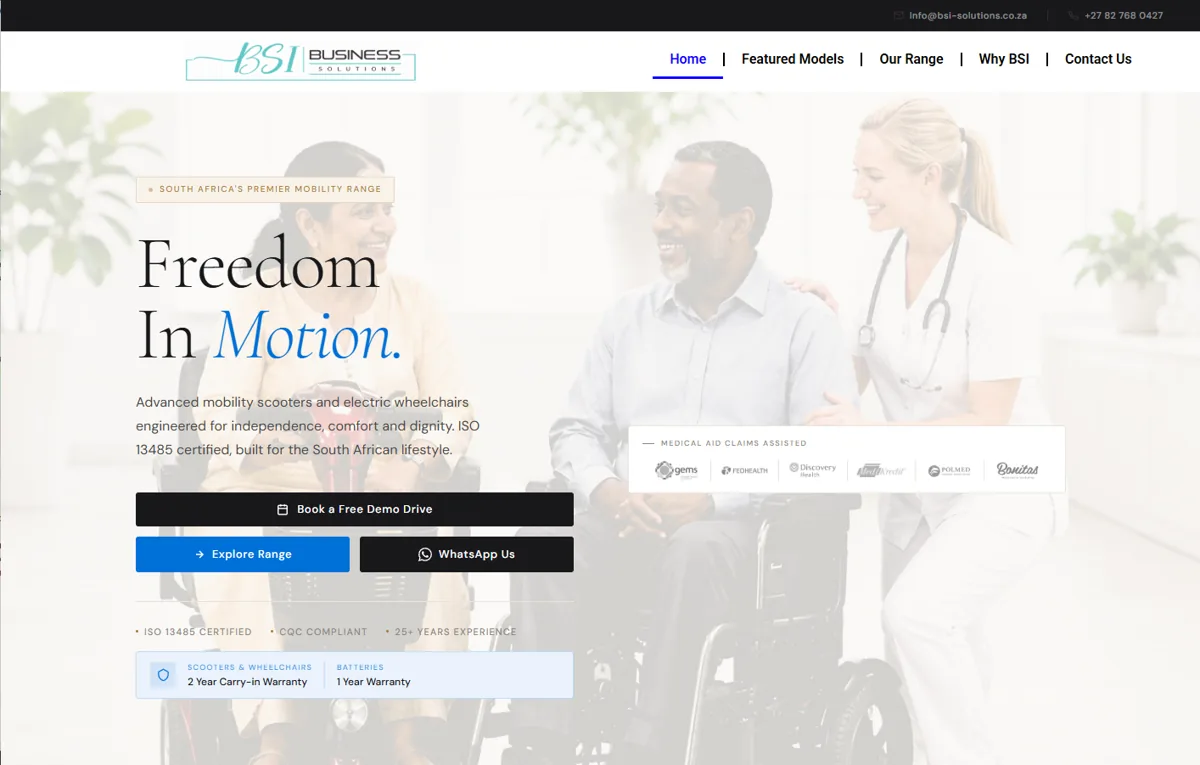
BSI Mobility supplies mobility scooters and electric wheelchairs across South Africa, describing itself as engineering products for independence, comfort, and dignity, backed by 25 plus years of experience. The business holds ISO 13485 certification, CQC compliance, and SAHPRA approval, the regulatory framework that governs medical devices in South Africa, which matters enormously for a product category where safety and reliability are not optional extras.
About BSI Mobility
The named product range spans the BSI Comforter, Cruiser, Elite, and the flagship Luxury model, alongside the Light Easy and Lux Eazy electric wheelchairs. The Luxury model’s specifications are stated in real detail: an 800W motor, quad 20Ah batteries giving a 35km range, a 180kg maximum load, a 15km/h top speed, and a 2 year warranty on the unit with a separate 1 year warranty on batteries. The business also assists customers with medical aid claims across major schemes including GEMS, Discovery Health, Fedhealth, Bonitas, and Polmed.
Buyers in this category, often older adults or people with mobility needs, or their family members researching on their behalf, are making a genuinely important purchase decision where safety, reliability, and after-sales support all matter as much as price.
What the website needed to do
Mobility equipment sits at the intersection of retail and medical device, which meant the site needed to do two things well at once: present real, specific product specifications (range, load capacity, speed, warranty) clearly enough for a buyer to actually compare models, and make the regulatory credentials, SAHPRA approval, ISO 13485, CQC compliance, genuinely visible, since these are not marketing flourishes but real indicators that the products meet South African medical device standards.
The medical aid claims assistance also needed clear, easy to find space, since for many buyers, understanding what their scheme will cover materially affects whether they can afford the product at all.
Why this matters for medical device and mobility equipment suppliers generally
For any business selling medical devices or equipment, regulatory approval is not a background detail, it is often the single most important trust signal on the entire site, since it is the difference between a device that meets recognised safety standards and one that does not. Stating the actual approval numbers and certifications, rather than a vague “certified” claim, gives a cautious buyer something concrete to verify.
Real product specifications matter more here than typical retail copy, since a buyer choosing between mobility scooter models is making a decision that affects their daily independence, and vague comparisons do not give them what they need to choose confidently.
Warranty terms deserve the same clarity as specifications. A buyer comparing mobility products wants to know exactly what is covered, for how long, and whether components like batteries carry different terms to the unit itself, since this is genuinely practical information that affects the real, ongoing cost of ownership.
Medical aid claims assistance also deserves genuine prominence rather than being an afterthought, since for many buyers, understanding what a specific scheme will actually cover materially changes whether a product is affordable at all, and a supplier who actively helps navigate that process removes a real, practical barrier many competitors leave the customer to solve alone.
The result
BSI Mobility’s site is live now at bsi-mobility.co.za, built to present real product specifications, SAHPRA and ISO regulatory credentials, and medical aid claims assistance clearly for buyers making a genuinely important purchase decision. It is one of the businesses featured on our portfolio.
Considering something similar?
Medical device and equipment suppliers vary in cost depending on how many products and specification sheets need loading. Our E-Commerce Website package is the usual starting point. Request a quote and we can confirm exact pricing for your catalogue.
Frequently Asked Questions
How much does a website for a medical device or mobility equipment supplier cost?
It depends on how many products and specification sheets need loading, and whether online ordering is required. Our E-Commerce Website package is the usual starting point, and we confirm exact pricing once we understand your catalogue.
Why does regulatory approval matter so much on a medical device website?
Because it is often the single most important trust signal available, showing a device meets recognised South African safety standards rather than relying on a vague quality claim. Stating actual approval numbers gives a cautious buyer something concrete to verify.
How much product detail should a mobility equipment website show?
As much real, specific detail as genuinely available, range, load capacity, speed, warranty terms, since buyers are comparing models against real daily needs and vague descriptions do not help them choose confidently between options.
Should medical aid claims information be included on the website?
Yes, where the business offers this kind of assistance. For many buyers, understanding what their scheme covers materially affects affordability, and making this information easy to find removes a real barrier to purchase.
Who is the actual buyer for mobility equipment like this?
Often not only the end user directly, but also family members or caregivers researching on their behalf. The site should be written clearly enough for someone who may be unfamiliar with the product category and is making the decision on someone else’s behalf.
How long does a website project for a medical device retailer take?
We confirm the timeline once the scope is agreed. It depends on scope, since presenting accurate product specifications and regulatory credentials correctly takes careful review, and getting this wrong is not something to rush on a medical device site.