Looters: A Website Case Study
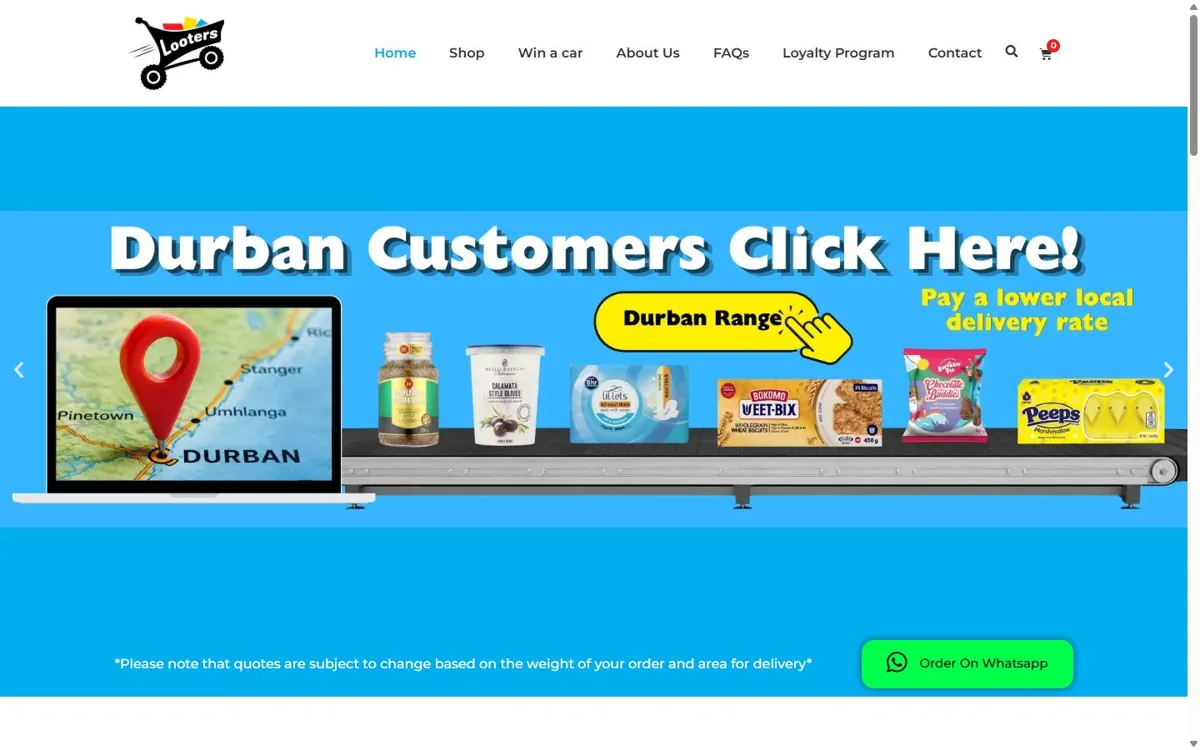
Looters Warehouse describes itself as a slashed price grocery store, selling clearance stock and near best before date groceries from established, recognisable brands. The business is explicit that it does not sell food past its use by date, operating from Cape Town with a second location referenced in Durban.
About Looters
The catalogue spans Food Cupboard, Beverages, Health and Beauty, and Sweets and Snacks, stocking named brands like Nongshim, Tasty Treats, Koo, Colgate, and Tony’s Chocolonely alongside clearance and near dated stock. Orders can be placed through the online store or directly via WhatsApp, giving customers a low friction way to buy without necessarily creating an account first.
The clearance grocery model depends entirely on trust in one specific claim: that nothing sold is actually expired. Everything else about the site had to support that claim being obviously true at a glance.
What the website needed to do
An online clearance grocery store lives or dies on two things: making the “not expired, genuinely near best before date” promise clear and credible, and making it fast and easy to actually buy. Grocery shopping online is a low margin, high frequency behaviour, people are not going to tolerate a slow or confusing checkout for a discounted tin of vegetables the way they might for a considered, higher value purchase.
That meant a clean, fast product catalogue organised by the categories customers actually shop by, straightforward pricing, and, importantly, the WhatsApp ordering option running alongside the standard online store, since some customers simply prefer messaging an order through directly.
Why this matters for grocery and clearance retailers generally
For any retailer selling near-dated or clearance stock, the core trust question, is this actually still good, has to be answered before a customer will buy anything else. Being explicit and upfront about the policy (a clear, stated commitment to never sell expired food) does more for conversion than any amount of discount messaging, because it removes the one real hesitation a new customer has.
Speed and simplicity in the buying process matter more for grocery than for almost any other e-commerce category, since the individual purchase value is usually low and customers will not tolerate friction proportional to a R30 tin of food the way they might for a R3,000 purchase.
Naming real, recognisable brands within the catalogue also does genuine credibility work here. Seeing familiar names among the clearance stock reassures a first-time customer that the discounts reflect genuine surplus and near-dated stock from real, trusted manufacturers, not unfamiliar or questionable products dressed up as a bargain.
Multi-location retailers also need to be careful that stock and availability information is accurate per location, since nothing frustrates a grocery shopper faster than finding an item listed online only to discover it is not actually available at the location they intended to collect from or that the online catalogue reflects a different branch’s stock entirely.
The result
Looters’s online store is live now at looters.co.za, built around fast category browsing, clear stock, and both standard checkout and WhatsApp ordering side by side. It is one of the businesses featured on our portfolio.
Considering something similar?
An online grocery or retail store’s cost depends heavily on catalogue size. A small catalogue can start from our E-Commerce Website package, while a larger, frequently changing catalogue like Looters’s involves more product loading and custom functionality, priced individually. Request a quote and we can confirm exact pricing for your store.
Frequently Asked Questions
How much does an online grocery or clearance store website cost?
It depends heavily on catalogue size. Our E-Commerce Website package is the usual starting point, but a large or frequently changing catalogue, like a grocery store’s, typically involves more product loading and custom functionality than a standard build, priced individually once we understand your catalogue.
Why is trust so important for a clearance grocery site?
Because the entire model depends on customers believing the stock is genuinely still good despite being clearance or near dated. Being explicit and upfront about that policy removes the single biggest hesitation a new customer has before buying anything at all.
Should an online store offer WhatsApp ordering alongside a standard checkout?
It can help, particularly for customers who prefer messaging over filling in an online form, or who have questions about specific stock before committing. It works best as an addition to, not a replacement for, a proper online store with real product pages.
How important is checkout speed for grocery e-commerce?
Very. Grocery purchases are typically lower value and higher frequency than considered purchases, so customers have much less patience for a slow or complicated checkout process relative to what they are spending.
Should product categories match how customers actually shop?
Yes. Organising a catalogue by the categories customers naturally think in (like Food Cupboard, Beverages, or Health and Beauty) makes browsing faster and more intuitive than a catalogue organised around internal supplier or stock logic.
How long does an online grocery store website take to build?
Most projects like this run four to six weeks from a signed off brief to launch, with the timeline mostly depending on how many products need to be photographed, priced, and loaded before the store can go live and start taking real orders.