NF Biokinetics: A Website Case Study
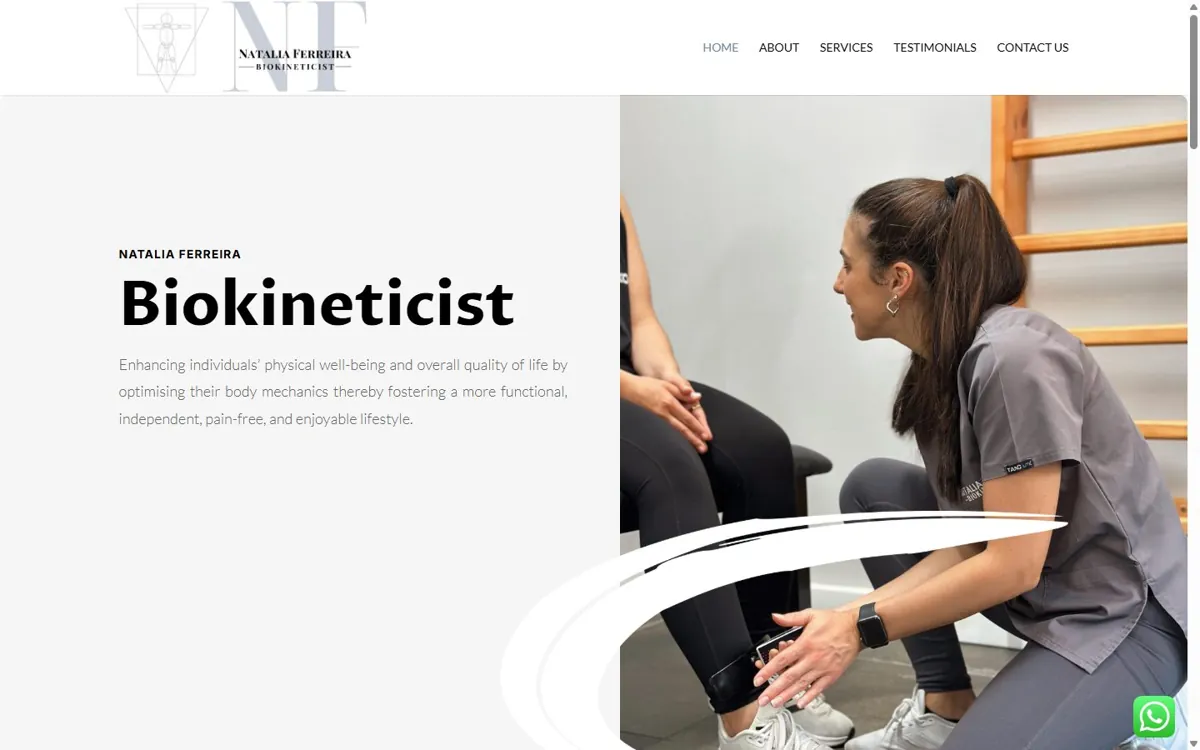
NF Biokinetics is a biokinetics practice run by Natalia Ferreira, based in N1 City, Goodwood, Cape Town, registered with the Health Professions Council of South Africa. Biokinetics focuses on final phase rehabilitation and scientific exercise therapy, aiming, as the practice puts it, to enhance physical wellbeing and quality of life by optimising how the body moves.
About NF Biokinetics
The practice covers a genuinely wide range of populations and needs: orthopaedic and neurological rehabilitation, chronic disease management, women’s wellness including pregnancy and PCOS specific exercise programmes, paediatric assessment, geriatric wellness, work with individuals with special abilities, general strength and fitness, corporate wellness, and home based rehabilitation. The practice also offers the Discovery Vitality Fitness Assessment.
That breadth, from post-surgery rehab through to pregnancy specific exercise and paediatric work, means very different people are searching for very different reasons, and each needs to recognise quickly that this practice serves their specific situation.
What the website needed to do
With such a wide range of populations served, from someone recovering from orthopaedic surgery to a pregnant client wanting safe exercise guidance to a parent seeking a paediatric assessment, the site needed clear pathways so each visitor could quickly find content speaking directly to their situation rather than one generic “biokinetics services” page.
HPCSA registration needed clear, visible placement too, since it is the credential that distinguishes a registered biokinetics practitioner from an unregulated personal trainer or fitness coach, a distinction many potential clients may not otherwise know to look for.
Why this matters for allied health and rehabilitation practices generally
For any allied health practice serving multiple distinct populations under one broader discipline, the website’s job is helping each visitor self-identify quickly. A pregnant client and a post-surgery orthopaedic patient are both potential biokinetics clients, but they are searching with completely different needs and questions, and content that speaks to both at once usually speaks clearly to neither.
Registration and regulatory standing matter significantly in allied health, since the public does not always know which health and fitness professions are formally regulated and which are not, and stating HPCSA registration plainly closes that gap.
Our guide to website design for physiotherapists and allied health practitioners covers related considerations for this broader category.
The result
NF Biokinetics’s site is live now at nfbiokinetics.co.za, built to give each served population, from rehabilitation to pregnancy wellness to paediatric assessment, its own clear path, with HPCSA registration displayed prominently. It is one of the practices featured on our portfolio.
Considering something similar?
Allied health and rehabilitation practices vary in cost depending on how many distinct client populations need their own content. Our Business Website package is the usual starting point. Request a quote and we can confirm exact pricing for your practice.
We are a Cape Town studio, and this is one of our local projects. More on Cape Town website design, including the other businesses we have built for.
Frequently Asked Questions
How much does a website for a biokinetics or allied health practice cost?
It depends on how many distinct client populations and services need their own content. Our Business Website package is the usual starting point, and we confirm exact pricing once we understand your practice.
Why does a practice serving many different populations need separated content?
Because each population, a post-surgery patient, a pregnant client, a parent seeking a paediatric assessment, is searching with genuinely different needs. Content that tries to speak to everyone at once usually fails to speak clearly to anyone, so separated, specific pathways help each visitor recognise quickly that the practice serves their situation.
Does HPCSA registration need to be stated clearly on a biokinetics website?
Yes. Many potential clients do not know which health and fitness professions are formally regulated, so clearly stating HPCSA registration closes that knowledge gap and distinguishes a registered practitioner from an unregulated fitness coach.
Should a practice mention medical aid assessments like Discovery Vitality?
Yes, where genuinely offered. It is a concrete, specific service many potential clients are actively looking for, and mentioning it clearly can be the deciding factor for someone specifically wanting to use their medical aid benefit.
How does a solo allied health practitioner’s website differ from a larger clinic’s?
The core needs are similar (clarity, credentials, and clear service pathways) but a solo practitioner’s site can lean more on the individual’s own qualifications, approach, and personal story, since the relationship with a solo practitioner is often more personal than with a larger, multi-practitioner clinic.
How long does a website project for an allied health practice take?
We confirm the timeline once the scope is agreed. It mostly depends on how many distinct client populations and services need their own clear content.
Should corporate wellness be presented separately from individual rehabilitation services?
Yes. A corporate client booking wellness sessions for staff is a business decision with a different buyer and different questions to an individual seeking personal rehabilitation, and separating the two clearly helps each find relevant, appropriately pitched content.
Does listing medical aid assessment options, like Discovery Vitality, help convert clients?
Yes, for clients specifically wanting to use a medical aid benefit. Stating this clearly and by name, rather than a general “medical aid accepted” claim, lets a client using that specific scheme confirm quickly that the practice supports what they are looking for.