Pear Environmental: A Website Case Study
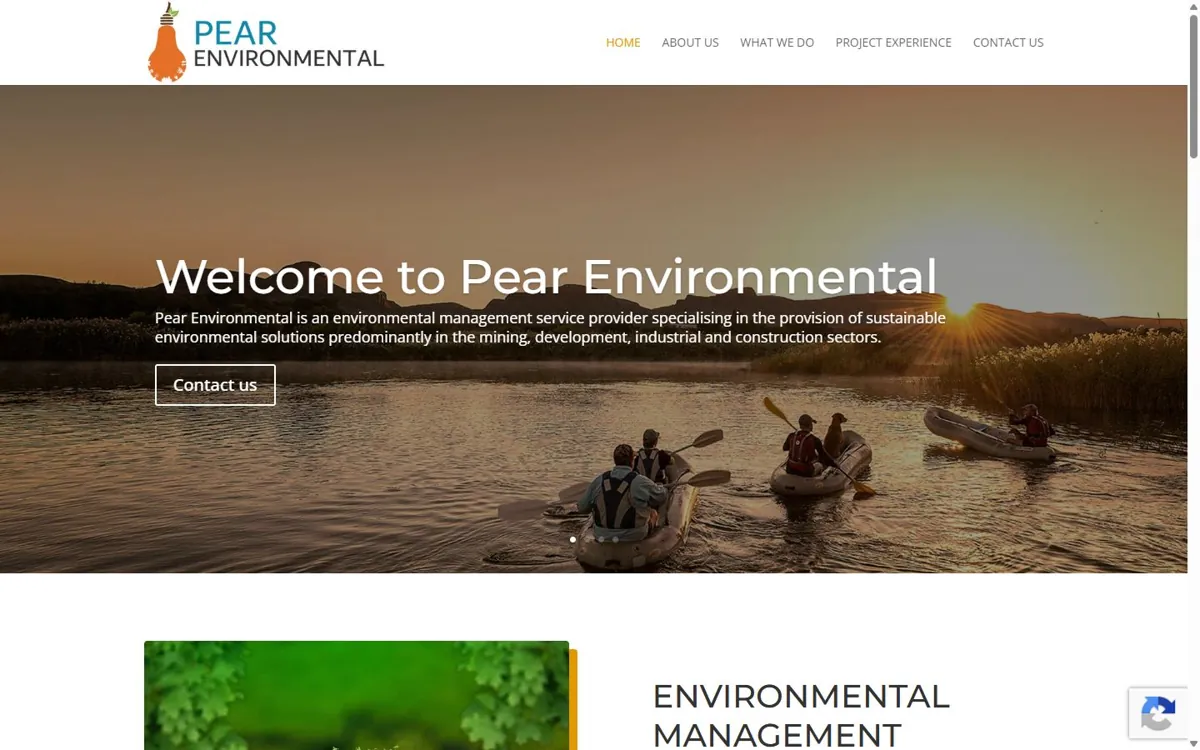
Pear Environmental is an environmental consultancy based in Pretoria, established in 2016 by Craig Allen, providing licensing, monitoring, compliance, and auditing services to the mining, development, industrial, and construction sectors. The company’s own project list includes work for Lafarge quarries, Actop plants, and the Lethabo Cement Plant, naming real, checkable clients rather than staying vague about its track record.
About Pear Environmental
The service scope is deliberately full stack: Environmental Impact Assessments, EMPr Performance Assessments, Environmental Control Officer services, dust, water, and noise monitoring, compliance auditing, public participation processes, specialist studies, sustainability planning, waste, water, and air emissions licensing, water use licence and NEMA assessments, financial provision and closure cost calculations, and DMRE licence applications. That range covers a project from initial assessment right through to ongoing compliance and eventual closure planning.
For a consultancy competing for industrial and mining sector work, being able to demonstrate real project experience against named clients matters more than almost any other credibility signal available.
What the website needed to do
Environmental consulting is regulation driven and technically dense. A prospective client, typically a mine, developer, or industrial operator navigating NEMA and related legislation, needs to quickly confirm that Pear Environmental’s specific service list actually covers their compliance requirement, whether that is an EIA, a water use licence, or ongoing ECO services during construction.
The named past projects needed real visibility too. A consultancy with genuine, specific, checkable experience (real named clients and facilities, not vague “we’ve worked with major companies” language) earns a different level of trust from a technical buyer than one that stays generic, and the site needed to let that specificity do its work.
Why this matters for environmental and regulatory consultancies generally
For any consultancy operating in a heavily regulated space, the website’s core job is proving genuine, specific competence against the exact regulatory processes a client is facing. That means naming the actual assessments and licence types handled (not just “environmental services”), and, wherever a client relationship allows, naming real past projects rather than relying on generic claims of experience.
Founder and team credibility also carries real weight in a technical consultancy like this, since clients are often trusting a small, specialist team with a process that carries real regulatory and financial risk if it goes wrong.
The breadth of assessment types on offer, from EIAs through to financial provision and closure cost calculations, also benefits from being organised by the stage of a project it applies to. A developer at the very start of a project has a different immediate need to one already managing an operating site’s ongoing compliance obligations, and structuring services around that project lifecycle makes it easier for either to find the right starting point.
Company registration details also matter for a consultancy operating in this space, since clients conducting due diligence before appointing an environmental consultant, particularly for larger industrial or mining projects, often want to verify the company’s formal legal standing before proceeding, and having this readily available removes an unnecessary step from that process.
The result
Pear Environmental’s site is live now at pearenvironmental.co.za, built to present the company’s full regulatory service scope and its named project experience clearly to mining, industrial, and construction clients navigating South African environmental legislation. It is one of the businesses featured on our portfolio.
Considering something similar?
Regulatory and technical consultancies vary in cost depending on how much service scope and project history need presenting. Our Business Website package is the usual starting point. Request a quote and we can confirm exact pricing for your consultancy.
Frequently Asked Questions
How much does a website for an environmental consultancy cost?
It depends on how much technical service scope and project experience need presenting. Our Business Website package is the usual starting point, and we confirm exact pricing once we understand your consultancy.
Why does naming real past projects matter for a consultancy?
Because specific, checkable experience (named clients and facilities) is far more convincing to a technical buyer than vague claims of general experience. It signals the consultancy has actually done comparable work before, which matters enormously when the process being sold carries real regulatory or financial risk.
How should a regulatory consultancy list its services?
By naming the actual assessment and licence types it handles (EIAs, water use licences, EMPr assessments, and so on) rather than a generic “environmental services” label. A client searching for a specific regulatory requirement needs to be able to confirm quickly that the consultancy covers exactly that.
Does founder or team background matter for a consultancy website?
Yes, particularly for a smaller specialist firm. Clients are trusting the team with a process that carries genuine regulatory and financial consequences if handled poorly, so visible, credible background on who is actually doing the work builds real confidence.
What makes an environmental consultancy website different from a typical business site?
The audience is highly technical and regulation literate, so the site needs to speak in specific, accurate regulatory terms rather than simplified marketing language. Getting the terminology and process detail right is itself a credibility signal to this kind of reader.
How long does a website project for an environmental consultancy take?
Most projects like this run four to six weeks from a signed off brief to launch, since accurately describing regulatory service types and reviewing named project references with the client takes genuine care to get right before anything is published.