SA Reflexology (TSARS): A Website Case Study
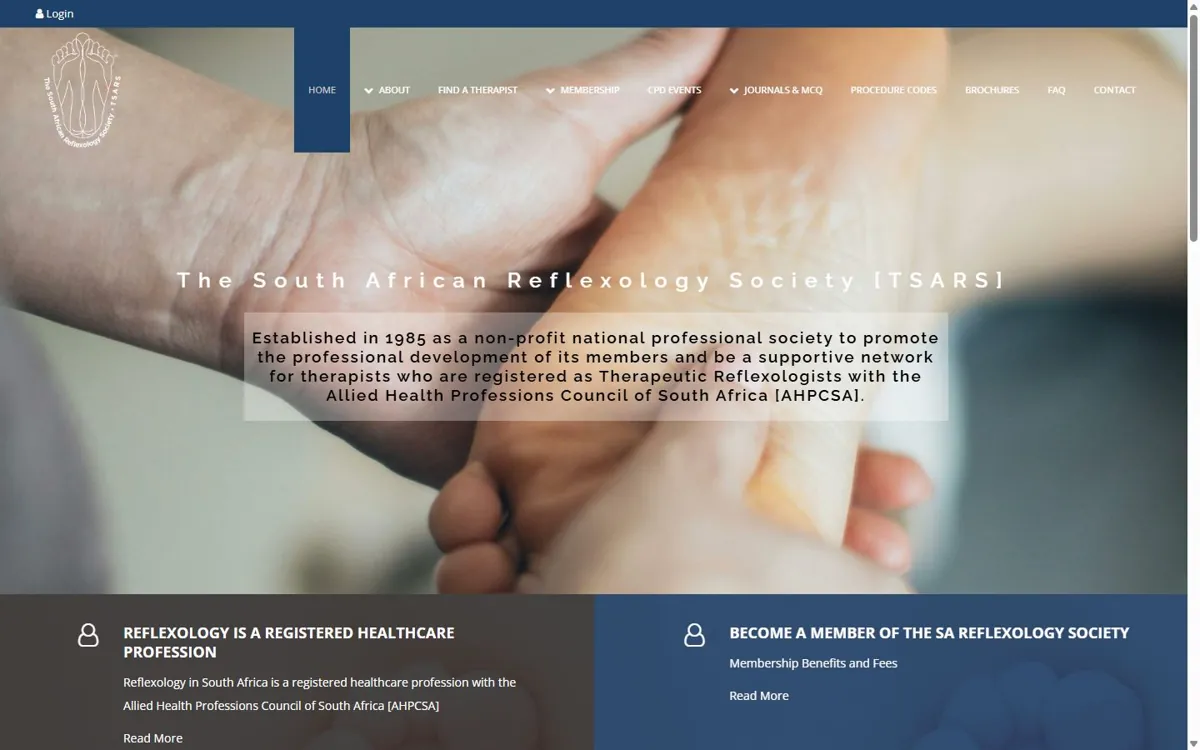
The South African Reflexology Society, known as TSARS, is the national non-profit professional society for Therapeutic Reflexologists in South Africa, established in 1985 and registered as an NPO since 2007. Members are registered with the Allied Health Professions Council of South Africa, the statutory body that formally recognised the reflexology profession in 2007 and introduced procedure codes for it in 2015.
About TSARS
The society runs a membership and support network, CPD events and a national congress, journals and MCQ resources, training and evidence based study information, and a public-facing Find a Therapist directory. As of its most recently stated figures, the society counted 215 members, representing 46 percent of all registered Therapeutic Reflexologists in South Africa at the time.
A professional society like this serves two audiences at once: its own members, who rely on it for CPD, community, and professional development, and the public, who use it to actually find a registered, credentialed reflexologist.
What the website needed to do
The Find a Therapist directory is arguably the site’s single most valuable feature to the public, since it is the direct answer to “how do I find a reflexologist I can trust” for anyone unfamiliar with the profession. That meant the directory needed to be genuinely easy to use, and the society’s role as the statutory recognised professional body needed to be stated clearly enough that a visitor understands why finding a member through this specific directory matters more than an unverified search result.
For the membership side, CPD events, the national congress, and journal and MCQ resources needed their own clear space, since members are a returning, engaged audience with specific ongoing needs distinct from the general public’s.
Why this matters for professional associations and societies generally
A professional association’s website has to serve as both a public trust signal for an entire profession and a genuine working tool for its own members. Getting the statutory or regulatory context right matters enormously here (AHPCSA registration, procedure codes, the profession’s formal recognition), since this is exactly the detail that separates a credentialed professional from an unregulated practitioner in a field the public may not otherwise know how to evaluate.
A working practitioner directory is often the single highest value feature such a site can offer, both to the public trying to find someone qualified and to members whose visibility depends on being listed properly.
Stating hard numbers, like the society’s real membership count and the percentage of the profession it represents, also does genuine credibility work that vague claims of “leading” or “premier” status cannot match. A specific, verifiable statistic gives a visitor something concrete to trust rather than a subjective claim they have no way to check.
The formal history of a profession’s regulation, when it happened, and under which body, is also worth presenting clearly, since it directly answers a common public question: is this a genuinely regulated profession or an informal practice. Stating the actual year of statutory recognition removes any ambiguity on that point.
The result
TSARS’s site is live now at sareflexology.org.za, built to serve both its membership base and the public searching for a registered, credentialed reflexologist through a working Find a Therapist directory. It is one of the organisations featured on our portfolio.
Considering something similar?
Professional associations and societies vary in cost depending on complexity, particularly whether a working member directory is needed. Our Business Website package is the usual starting point. Request a quote and we can confirm exact pricing for your organisation.
Frequently Asked Questions
How much does a website for a professional association cost?
It depends on complexity, particularly whether a searchable member directory is needed. Our Business Website package is the usual starting point, and we confirm exact pricing once we understand what you need it to do.
Why does a “find a practitioner” directory matter so much for a professional body?
Because it is often the single most direct value a professional association offers the public: a fast, trustworthy way to find someone qualified in a field where the public may not otherwise know how to tell a credentialed practitioner from an unregulated one.
How should a regulated profession’s statutory context be presented online?
Clearly and specifically, naming the actual regulatory body and what registration or recognition means in practice, rather than a vague reference to “qualified professionals.” This detail is exactly what separates a credentialed practitioner from an unregulated one in the eyes of a public visitor.
Does a membership organisation’s website need a members-only area?
It depends on what members actually need access to. CPD resources, journals, and event information can often work as clearly organised public or lightly gated content rather than a full members-only login system, depending on the organisation’s preference and resources.
What makes a professional association’s website different from a typical business site?
It serves two distinct audiences with different needs at once, the public looking for a trustworthy practitioner, and members looking for ongoing professional resources and community, and the site needs to serve both clearly rather than defaulting to one.
How long does a website project for a professional association take?
Most projects like this run four to six weeks from a signed off brief to launch, with a working practitioner directory typically the part that needs the most planning, since it has to stay easy for members to keep updated over time, not just look good at launch.