Capax: A Website Case Study
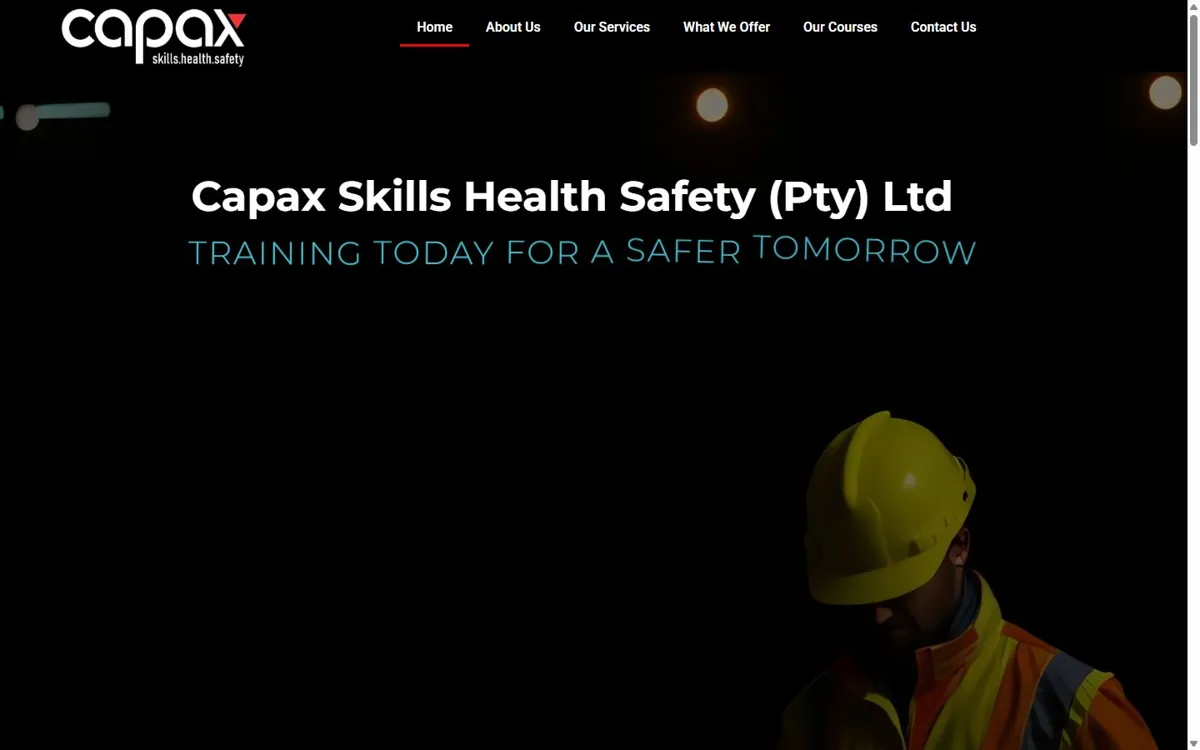
Capax Skills Health Safety is an occupational health and safety training provider based in Bloemfontein, Free State, serving high risk industries across South Africa. The business tailors compliance and safety culture training to the specific risks each client industry faces, rather than running one generic course for everyone.
About Capax
The training offering is genuinely broad: on-site training, e-learning, and workshops, first aid certification across three levels, several QCTO-accredited programmes, and specific courses covering OHSA compliance, construction safety, fire safety, working at heights, PPE, incident investigation, emergency response, and contractor induction. The company states it has trained more than 50 employees and references OHSA and MHSA compliance directly, alongside SAQA, QCTO, and Employment and Labour recognition.
Capax is also a licensed INTRA (Intrasafe) training provider, presenting INTRA health and safety training material, and INTRA is a JWD client too, so we understand the materials side of the business as well as the training side.
That range of course types, delivery formats, and industry-specific angles is a lot to communicate clearly, especially to a buyer, typically a safety officer or HR manager, who needs to match a specific compliance requirement to the right course fast.
What the website needed to do
Safety training is a compliance-driven purchase. The person searching is usually working against a specific legal requirement or an audit finding, not browsing casually, which means the site needed to make it fast to find the right course for a specific need (construction safety, working at heights, first aid) rather than making a visitor dig through a generic course catalogue.
Credibility mattered heavily too. Displaying SAQA, QCTO, and Employment and Labour recognition clearly, alongside the OHSA and MHSA compliance framing, gives a compliance-focused buyer the reassurance that a course will actually satisfy their legal obligation, not just look useful.
Why this matters for training and compliance providers generally
For any business selling compliance-driven training or certification, the website’s core job is proving that a course genuinely satisfies the requirement the buyer is working against. That means credentials, accreditation, and recognised body affiliations need to be visible and specific, not just a general “we are accredited” claim. A safety officer choosing a supplier is often personally accountable if the training turns out not to meet the actual legal standard, which raises the trust bar considerably.
Delivery format also matters as a genuine differentiator. Offering on-site, e-learning, and workshop formats side by side, and being clear about which suits which situation, helps a buyer self-select the right option instead of guessing.
Industry-specific framing helps too. A safety officer at a construction site and one at a manufacturing plant are working against different risk profiles, and a training provider who tailors its messaging to the buyer’s actual industry, rather than presenting one generic safety pitch, reads as genuinely relevant rather than a supplier working through a standard script.
Stated outcomes, where genuinely measured, also carry real weight for a compliance buyer, since a business investing in safety training usually wants some sense of the practical benefit beyond simply ticking a legal box. A specific claim about reduced incidents, backed by the provider’s own track record, is more persuasive than a general assurance that training “improves safety culture.”
The result
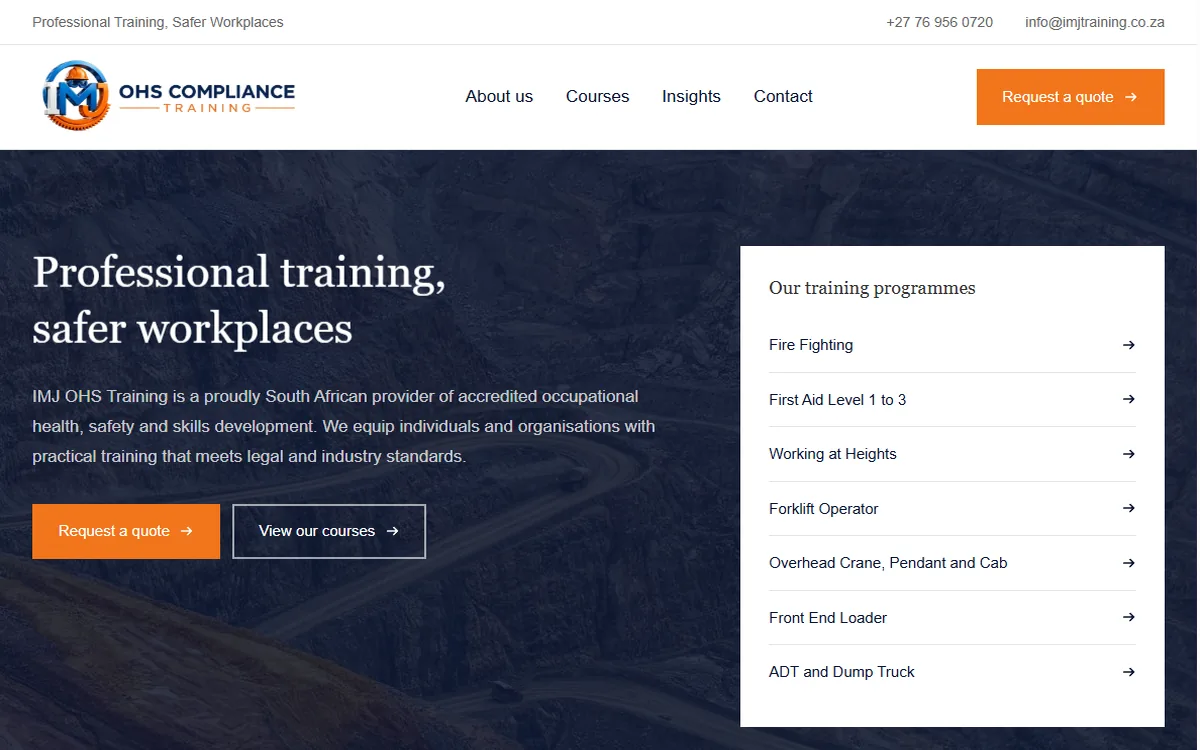
Capax’s site is live now at capax.co.za, built to make Capax’s course range, accreditation, and industry-specific training approach clear and easy to navigate for safety officers and HR managers working against real compliance deadlines. It is one of the businesses featured on our portfolio. For another Bloemfontein safety training provider, built as a custom site with its own admin area, see the IMJ OHS Training case study.
Considering something similar?
A training or compliance business with a course catalogue like this varies in cost depending on how many courses need their own content. Our Business Website package is the usual starting point. Request a quote and we can confirm exact pricing for your business.
Frequently Asked Questions
How much does a website for a training or compliance company cost?
It depends on how many courses and accreditation types need their own content. Our Business Website package is the usual starting point, and we confirm exact pricing once we understand your catalogue.
How should a training company structure its course catalogue online?
By making it fast for a buyer working against a specific compliance requirement to find the exact course they need, rather than presenting one long undifferentiated list. Grouping by course type and by industry, with clear delivery format options, helps a time-pressured buyer self-select quickly.
Why does accreditation display matter so much for training providers?
Because the buyer is often personally accountable for ensuring training actually satisfies a legal requirement. Vague accreditation claims do not reassure that kind of buyer. Specific, named recognition (SAQA, QCTO, or the relevant sector body) does.
Should a training company offer multiple delivery formats?
If it genuinely does, yes, and each should be explained clearly enough that a buyer can judge which suits their situation. On-site, e-learning, and workshop delivery each solve a different logistical problem, and conflating them into one generic “training available” message loses that distinction.
Who is the actual buyer for occupational health and safety training?
Usually a safety officer, HR manager, or compliance lead acting on behalf of their employer, working against a specific legal or audit requirement, rather than an individual choosing a course for personal interest. The website should be written with that professional, deadline-driven buyer in mind.
How long does a website project for a training provider take?
Most projects like this run three to five weeks from a signed off brief to launch, with the main variable being how many course categories need their own dedicated content and how much accreditation documentation needs to be gathered and displayed correctly.